Skip to content
Summo

Features

The four screens you will have open most: one shelf for recordings and notes, a timestamped transcript, tasks taken straight from what was said, and a screen that says plainly what your audio costs. With real screenshots of the running app.

Four screens worth a longer look

Not a feature list. These are the four you will have open most.

One shelf, not a meeting inbox

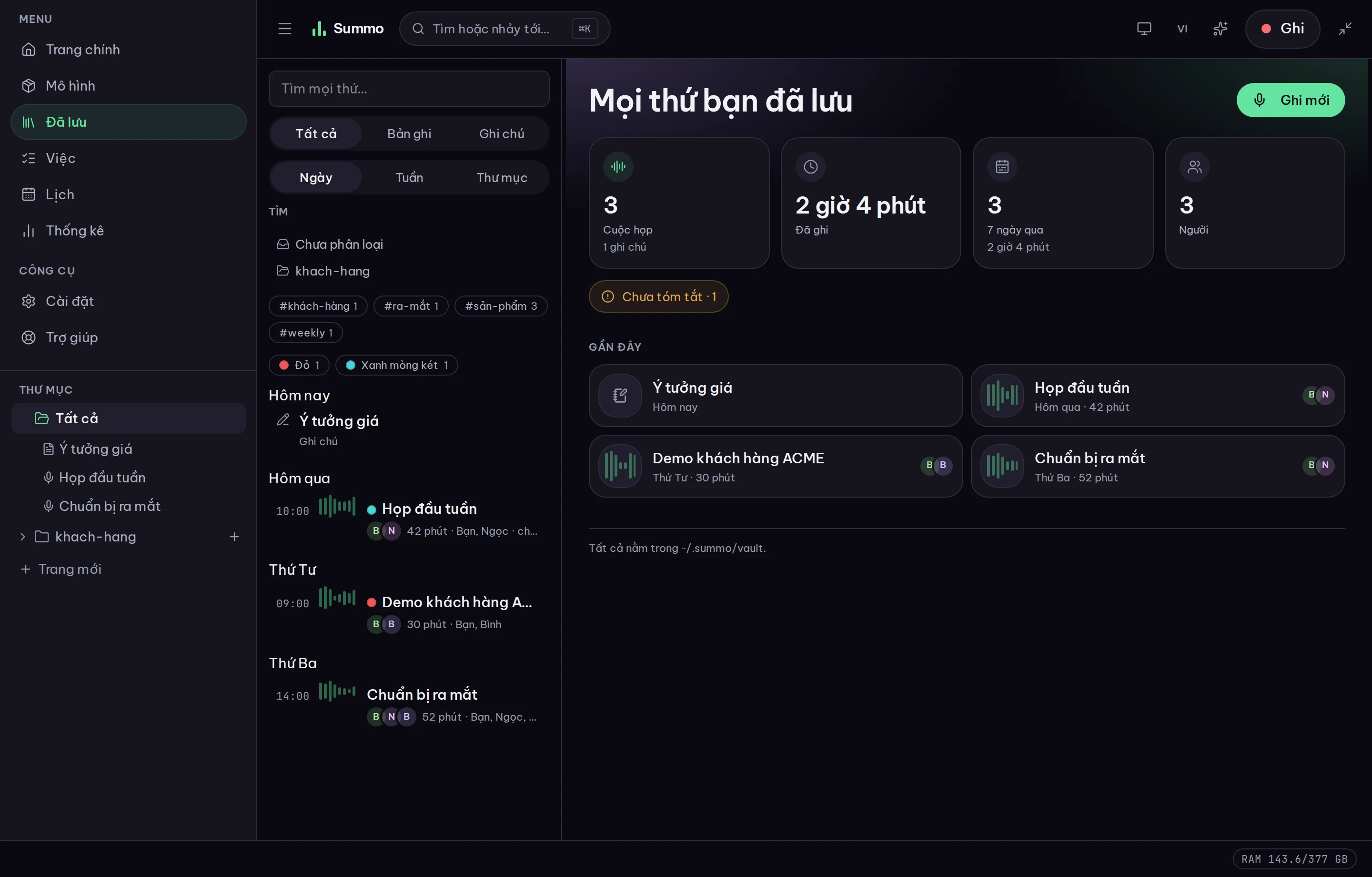
Recordings and typed notes live together, because they are the same kind of document. Filter by folder, tag, colour — or by kind.
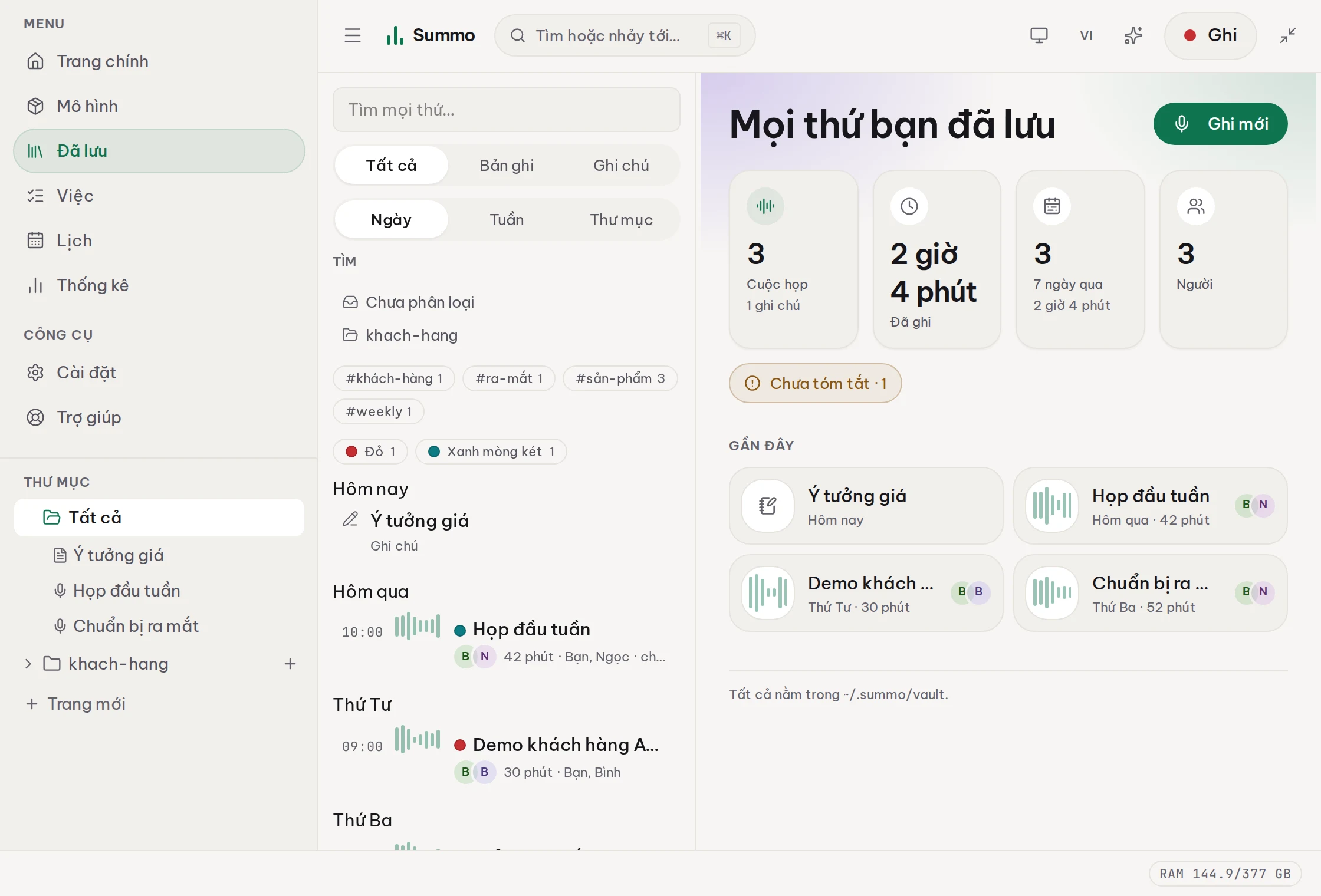
  • Folders and pages inside pages, the way Obsidian does it
  • Tags and colours, counted as you go
  • Search without tone marks still finds it: "hop ngan sach" finds "họp ngân sách"
The library: recordings and notes, filtered by folder, tag and colour.

A timestamped transcript, and an assistant that cites it

Every line knows which second of the recording it came from, and plays from there. Every answer says where it got it.
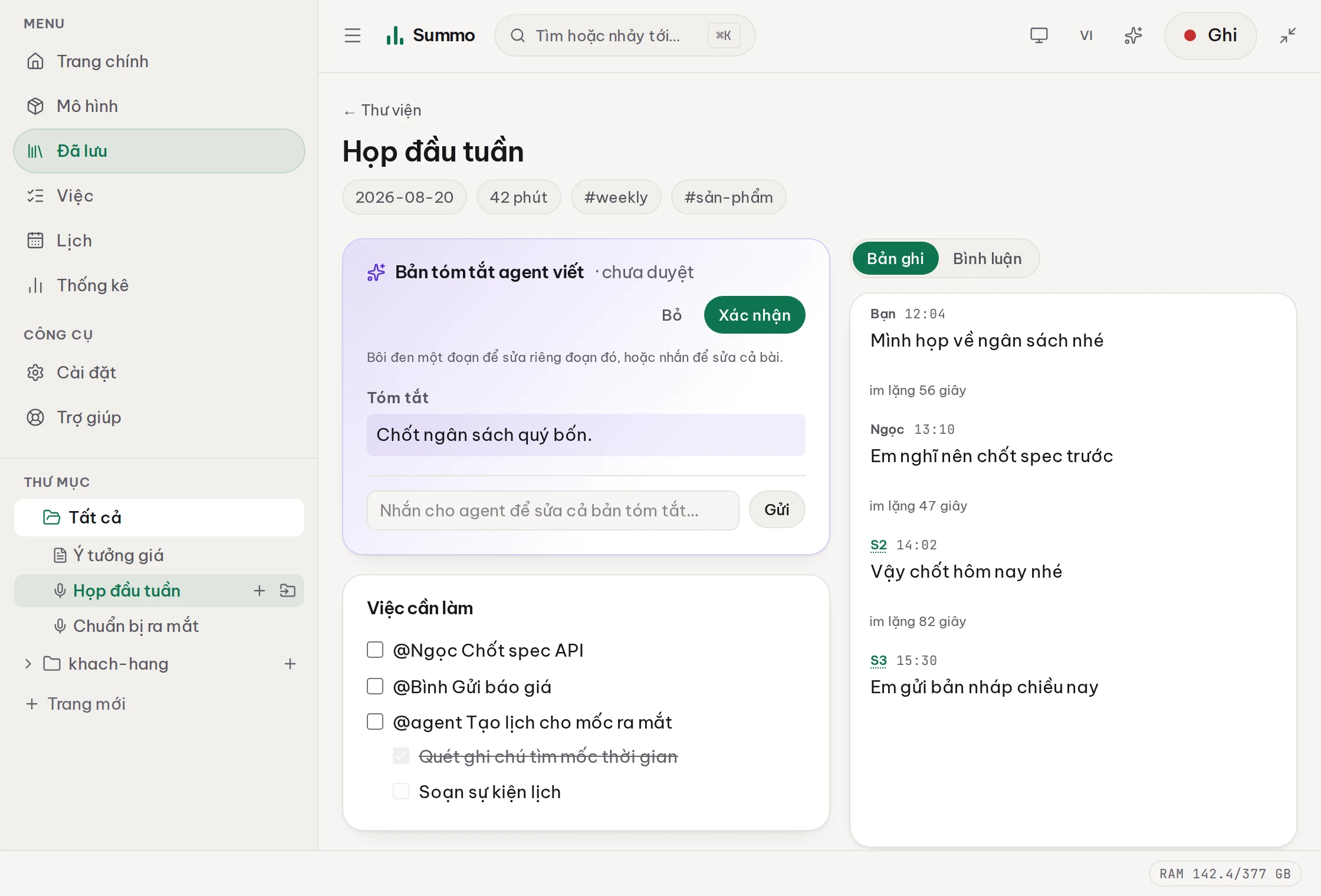
  • Click a line to jump to it in the audio
  • Name a voice once and the transcripts already written follow
  • Translate line by line, with a model that runs in the app
An open meeting: summary, tasks and a timestamped transcript.

Tasks taken straight from what was said

Who owns it, when it is due, which sentence it came from — all inside that meeting's Markdown file, not in a database of its own.
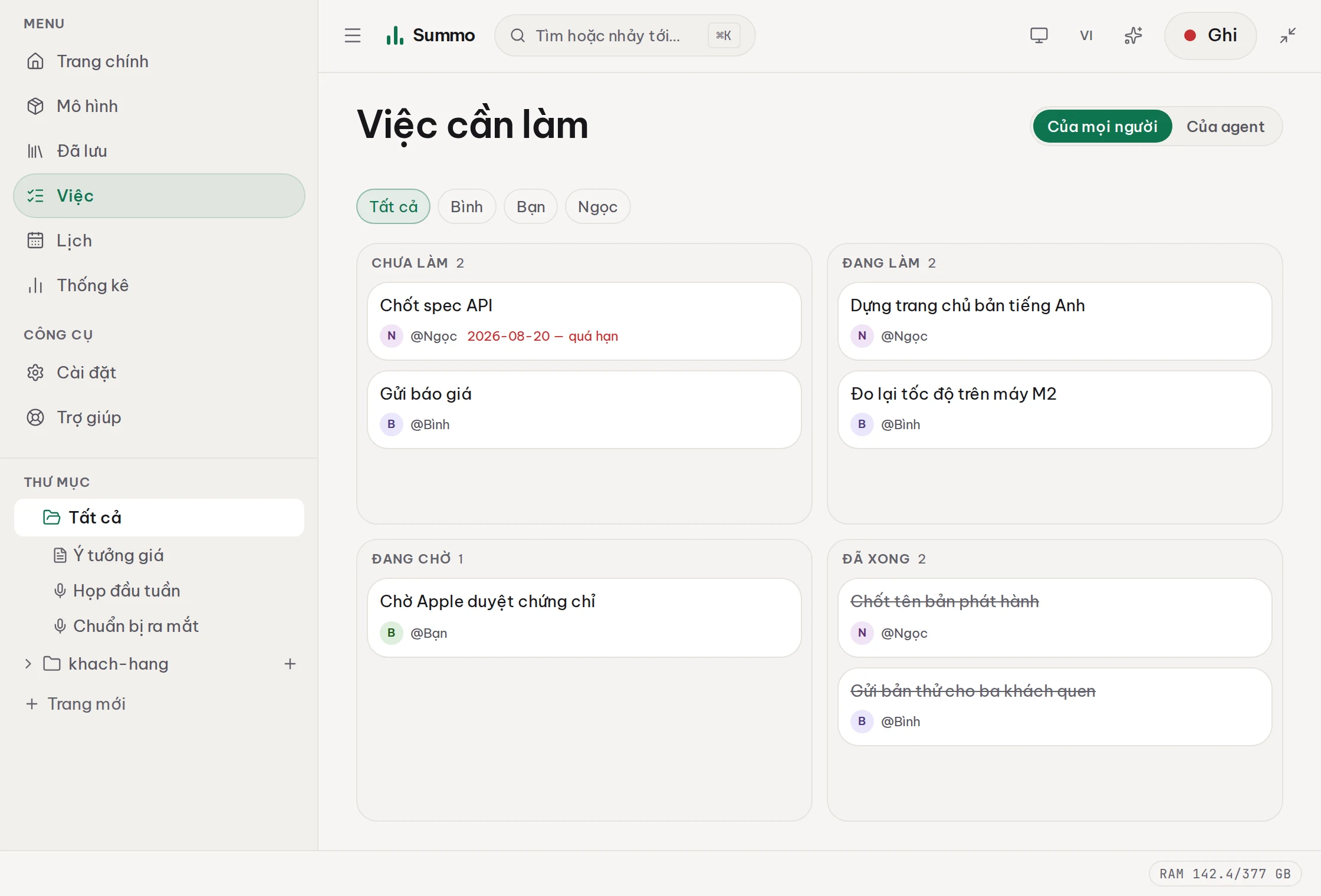
  • Dragged between four lanes
  • Hand one to an agent by writing @agent
  • A calendar and reminders, without another app
The task board: four lanes.

You decide what is kept, and for how long

Audio is the largest thing here and the most sensitive. So there is a screen that says plainly what it costs, and a box for when to delete it.
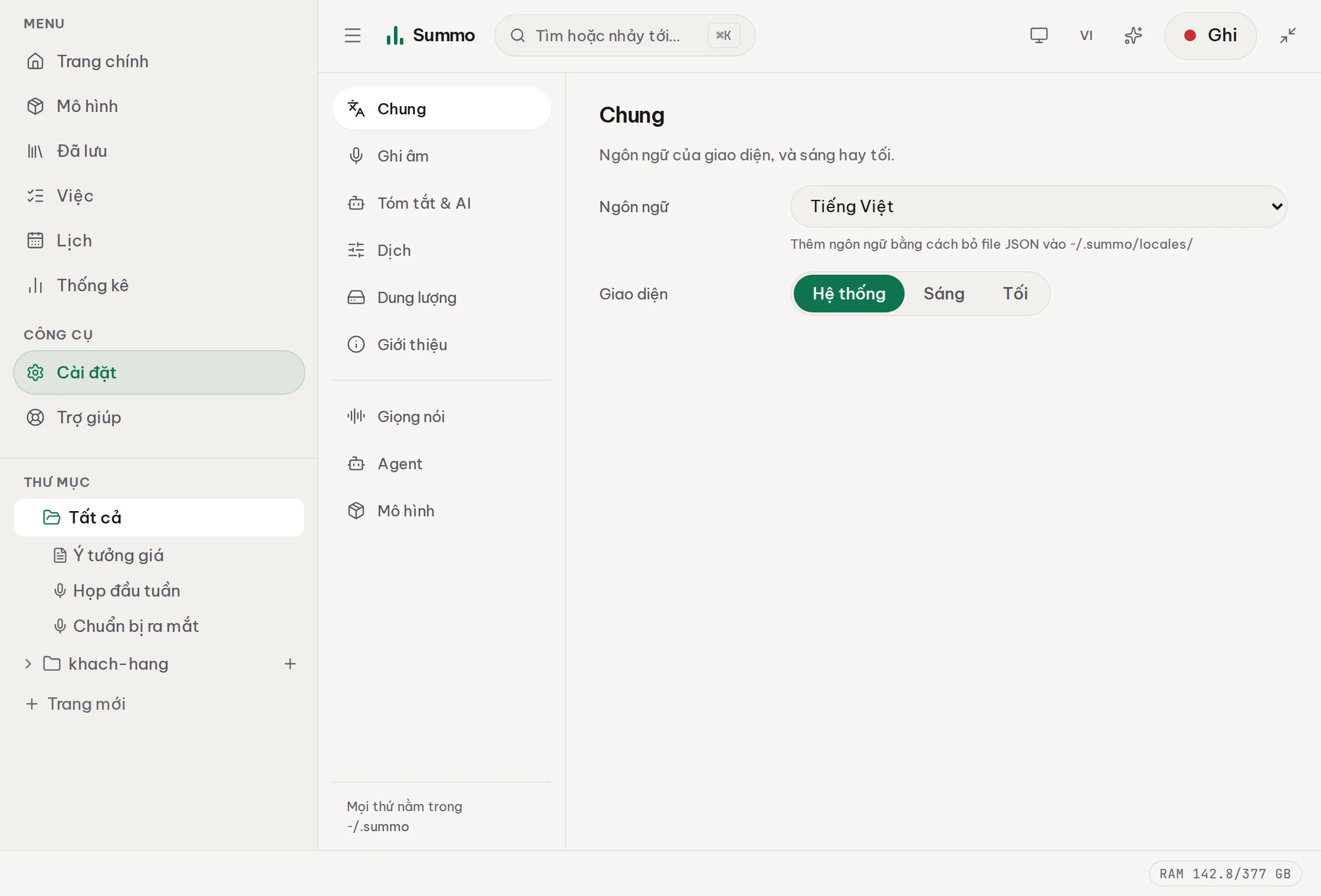
  • Disk use split by audio, documents and models
  • Delete recordings after N days and keep the transcripts
  • No account, no telemetry, and no route for audio to leave
Settings, the storage section: what audio costs and how long it is kept.

And every other screen

Real screenshots of the running build, not mockups. The interface is Vietnamese here; it also speaks English, Japanese and Chinese.
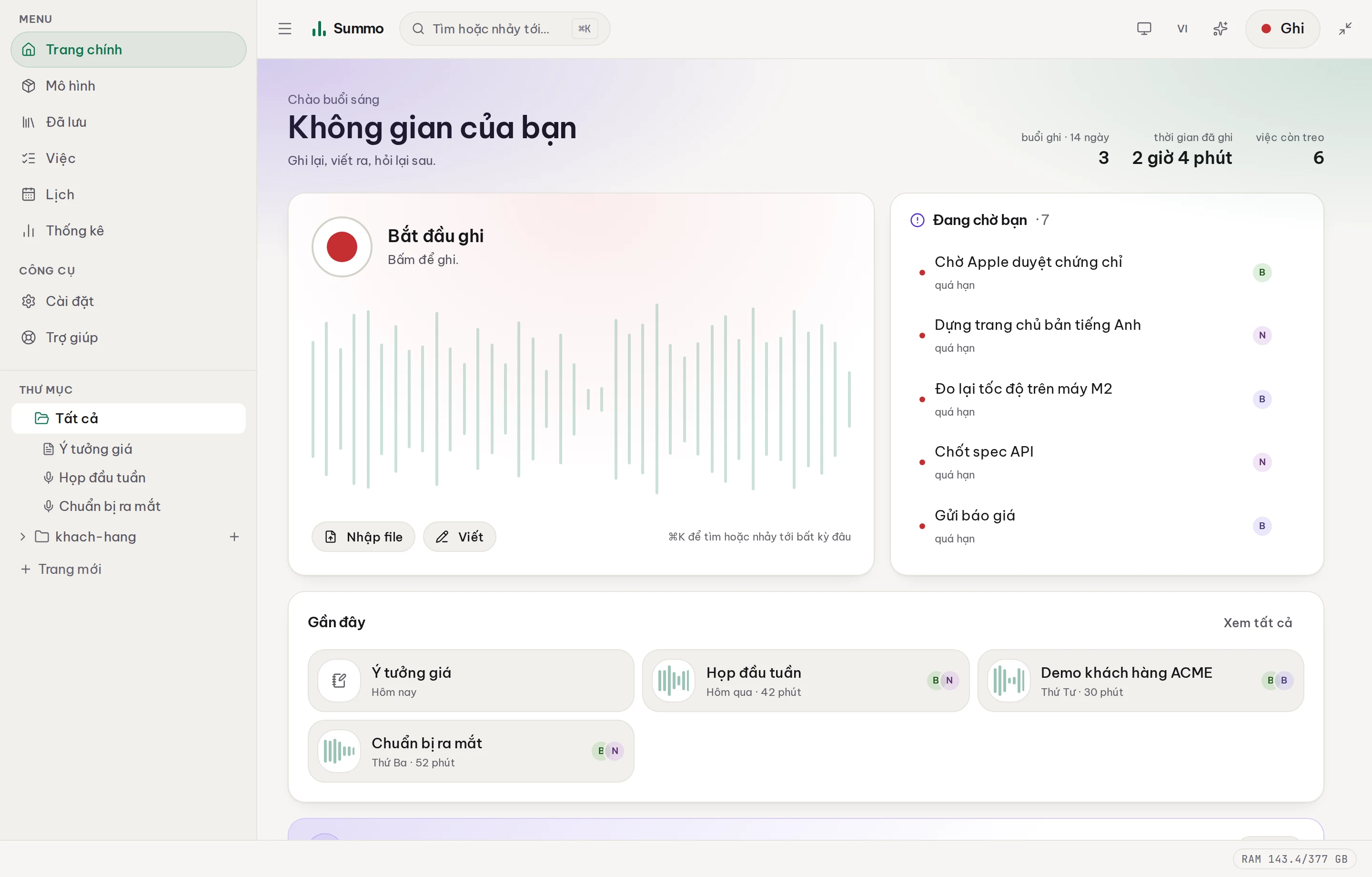
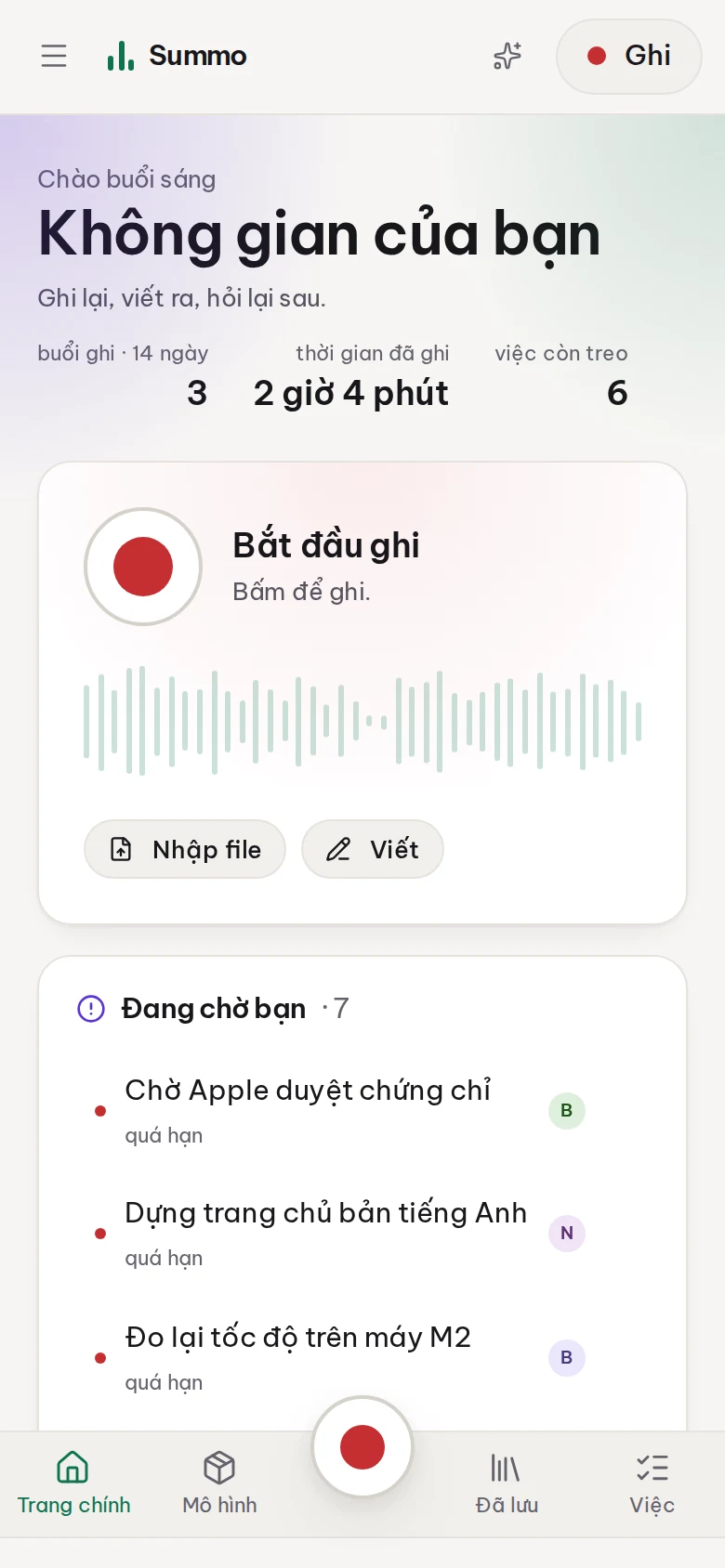
Summo's home screen: the record card, what is waiting, and recent entries.
Home — record, what is waiting for you, and what you touched last.
The library: recordings and notes, filtered by folder, tag and colour.
Library — recordings and typed notes on one shelf, filtered by folder, tag or colour.
An open meeting: summary, tasks and a timestamped transcript.
A meeting — the summary, the tasks, and every line stamped with when it was said.
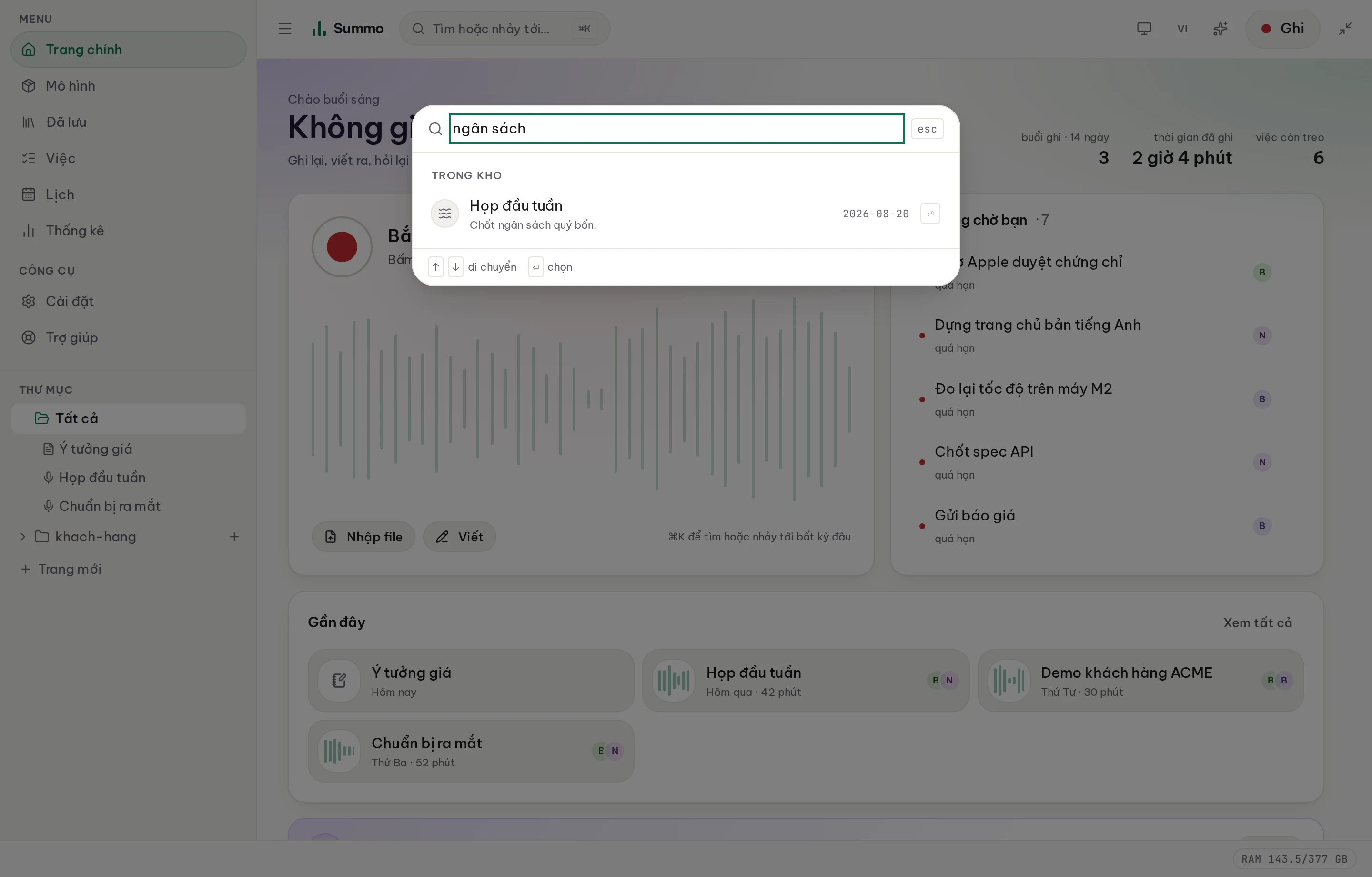
TheK palette open, searching the whole vault.
⌘K — search everything, or jump straight to a screen.
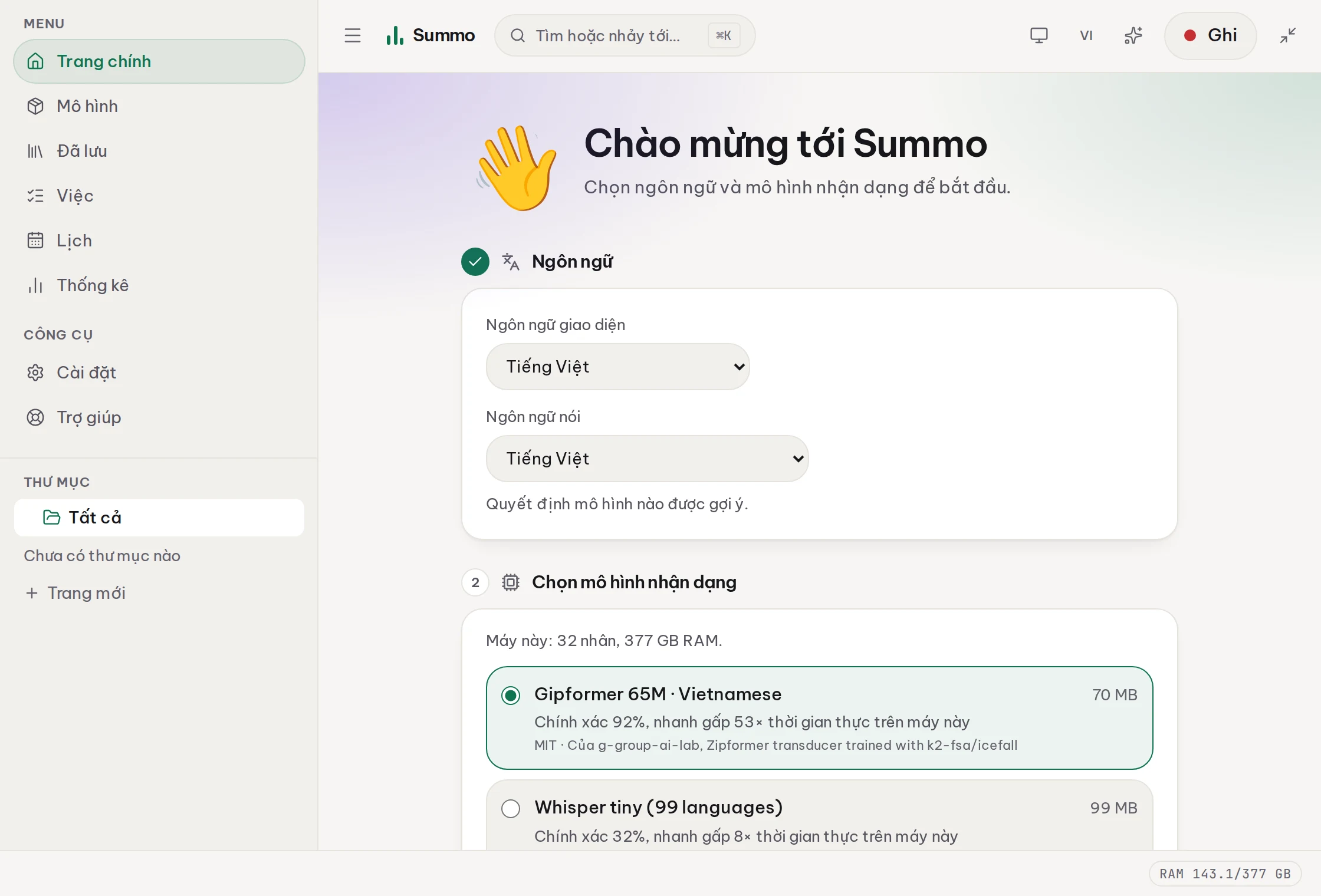
The first-run screen: spoken language, microphone permission, and which model to install.
The first launch — Summo measures the machine and suggests a model it can actually run, and says why.
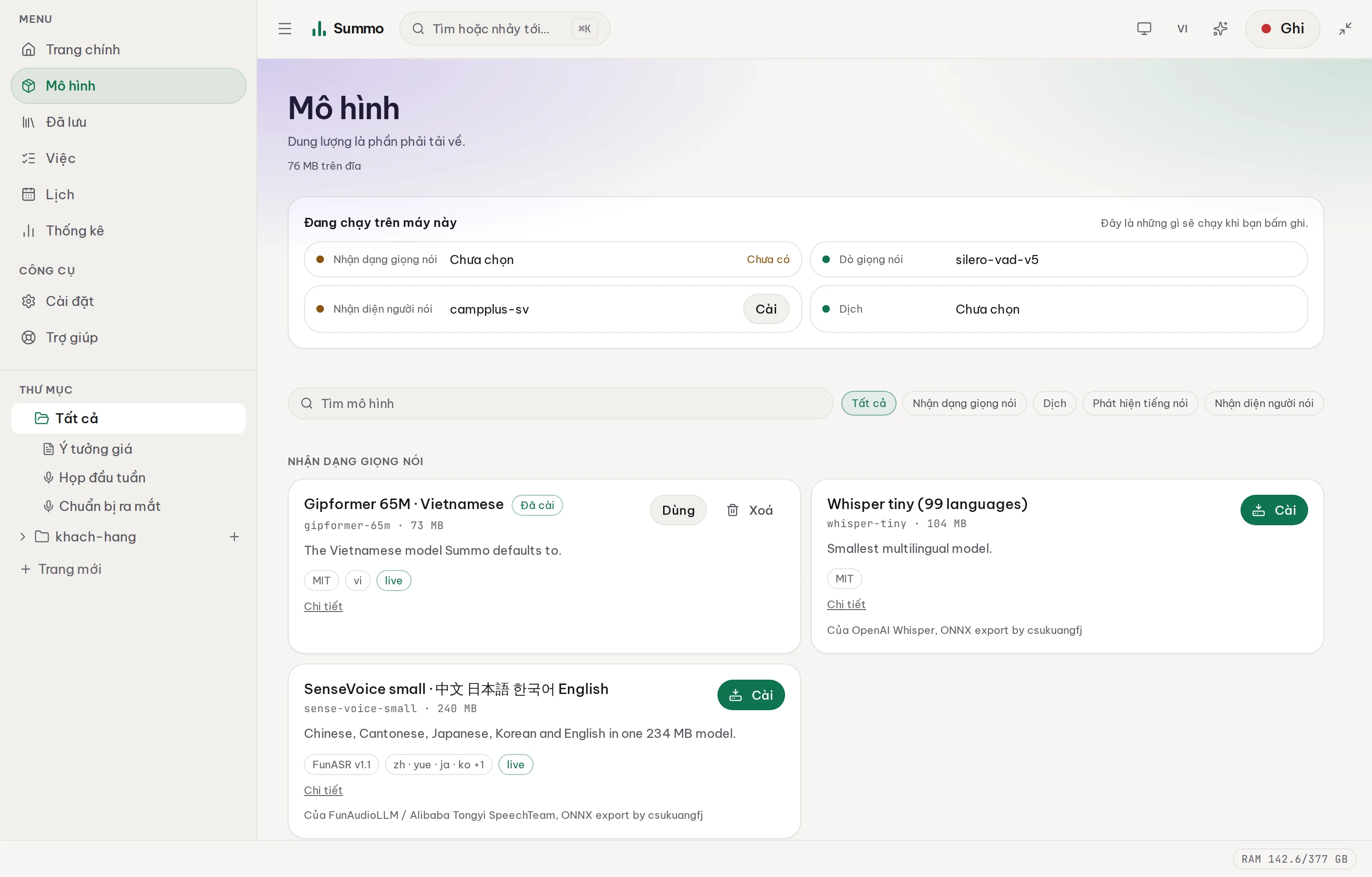
The speech model catalogue with sizes, licences and an install button.
Models — downloaded, sha256-checked, run on your machine. Each one's licence is on the card.
The task board: four lanes, dragged between them.
Tasks — taken straight from the transcript, dragged between lanes.
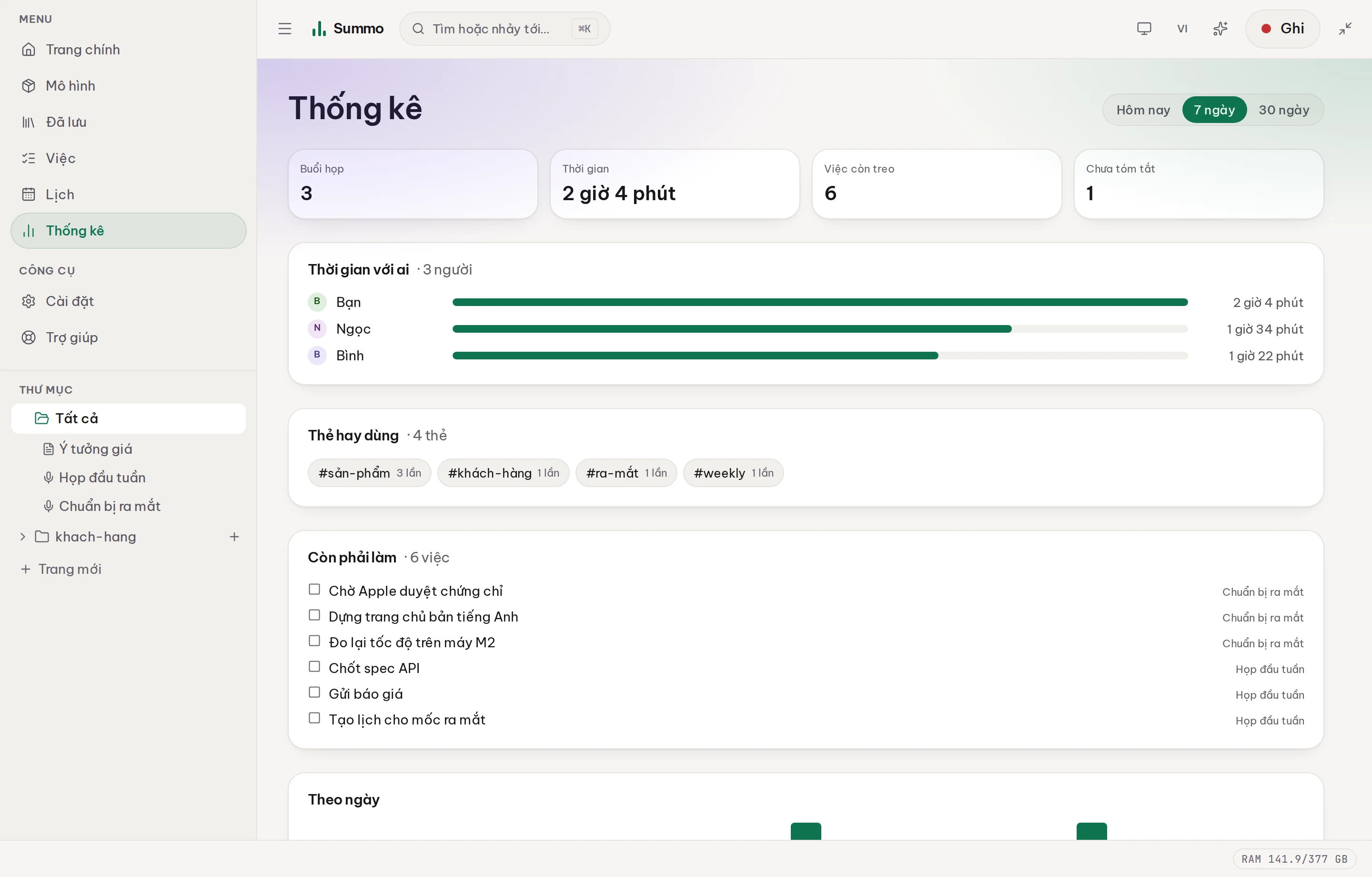
Analytics: meeting time by week and by person.
Analytics — how much time, with whom, in which week.
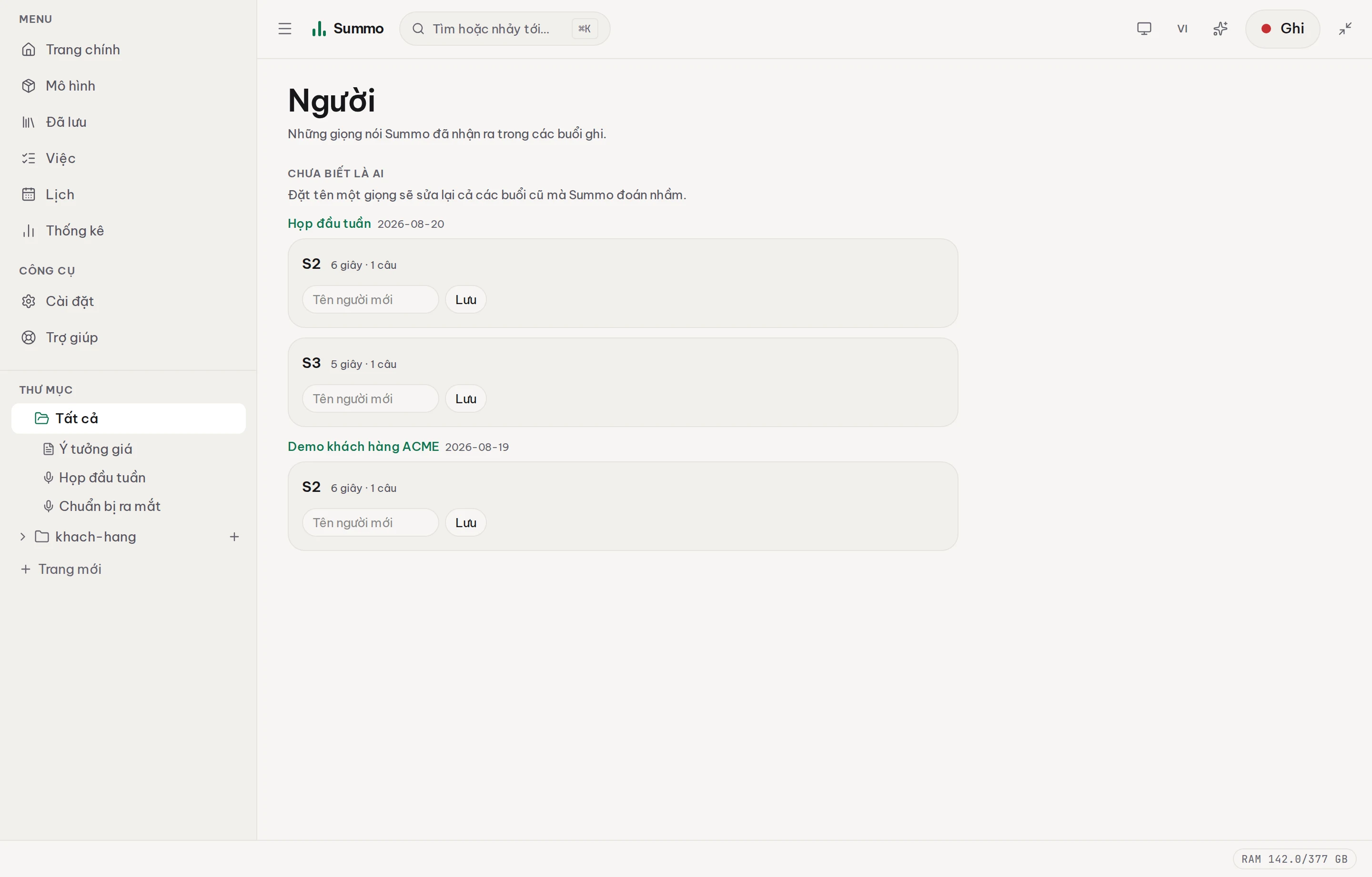
The voice book: name a voice and the transcripts follow.
Voices — name someone once and the transcripts already written get their name.
Settings, the storage section: what audio costs and how long it is kept.
Settings — six sections, including how long recordings are kept before they are deleted.
The library in dark mode.
Dark — the same screens, following the system or chosen outright.
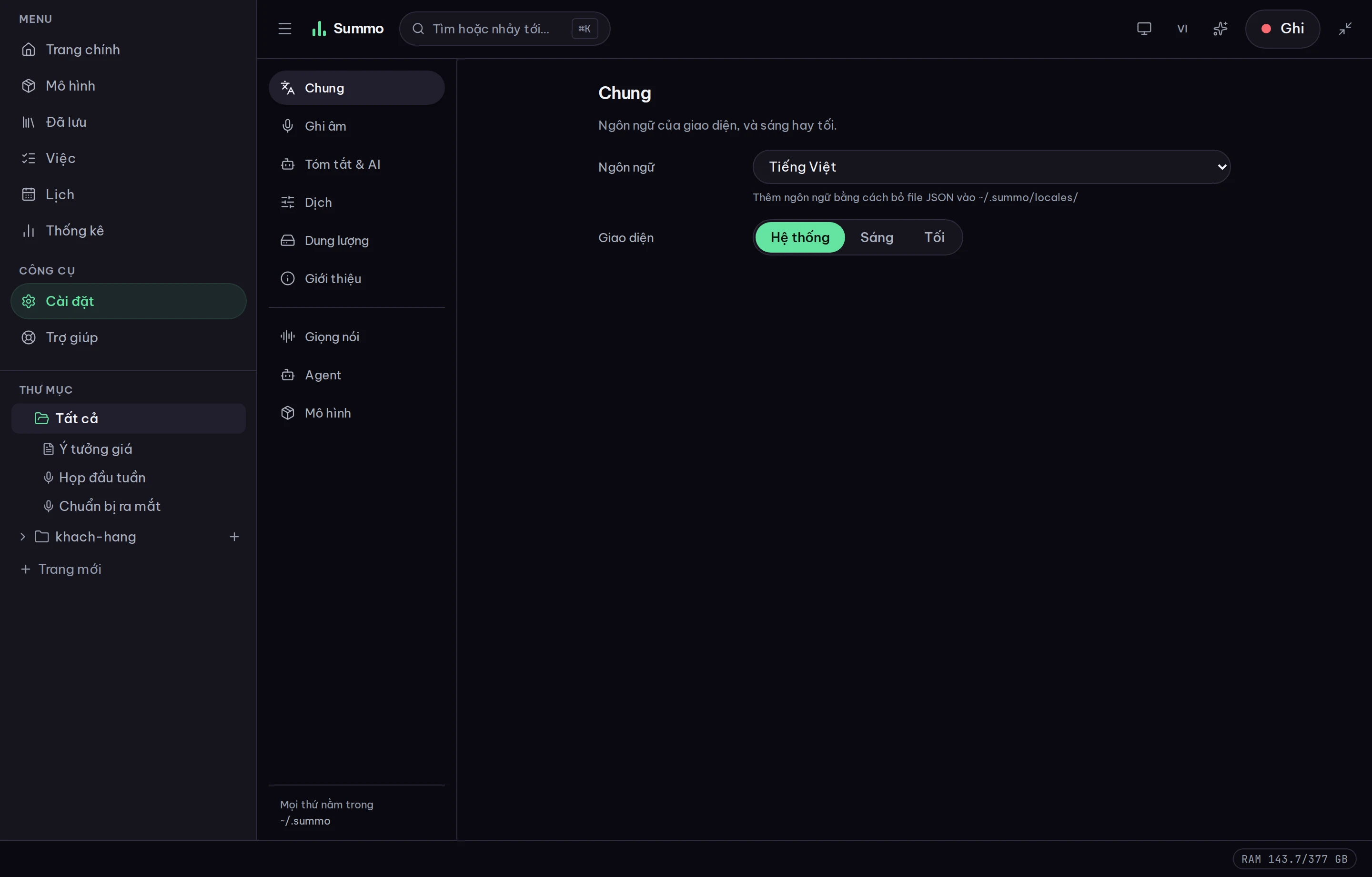
The intelligence settings in dark mode: choosing a language-model provider.
Intelligence — choose where the summarising model runs. Recognition is always on your machine.

7 more screens — open this page on a laptop to read them.

On a phone

The same app and the same vault — a bottom bar instead of a side column.

Summo at 390px: home, with the bottom bar.
Home, on a phone.
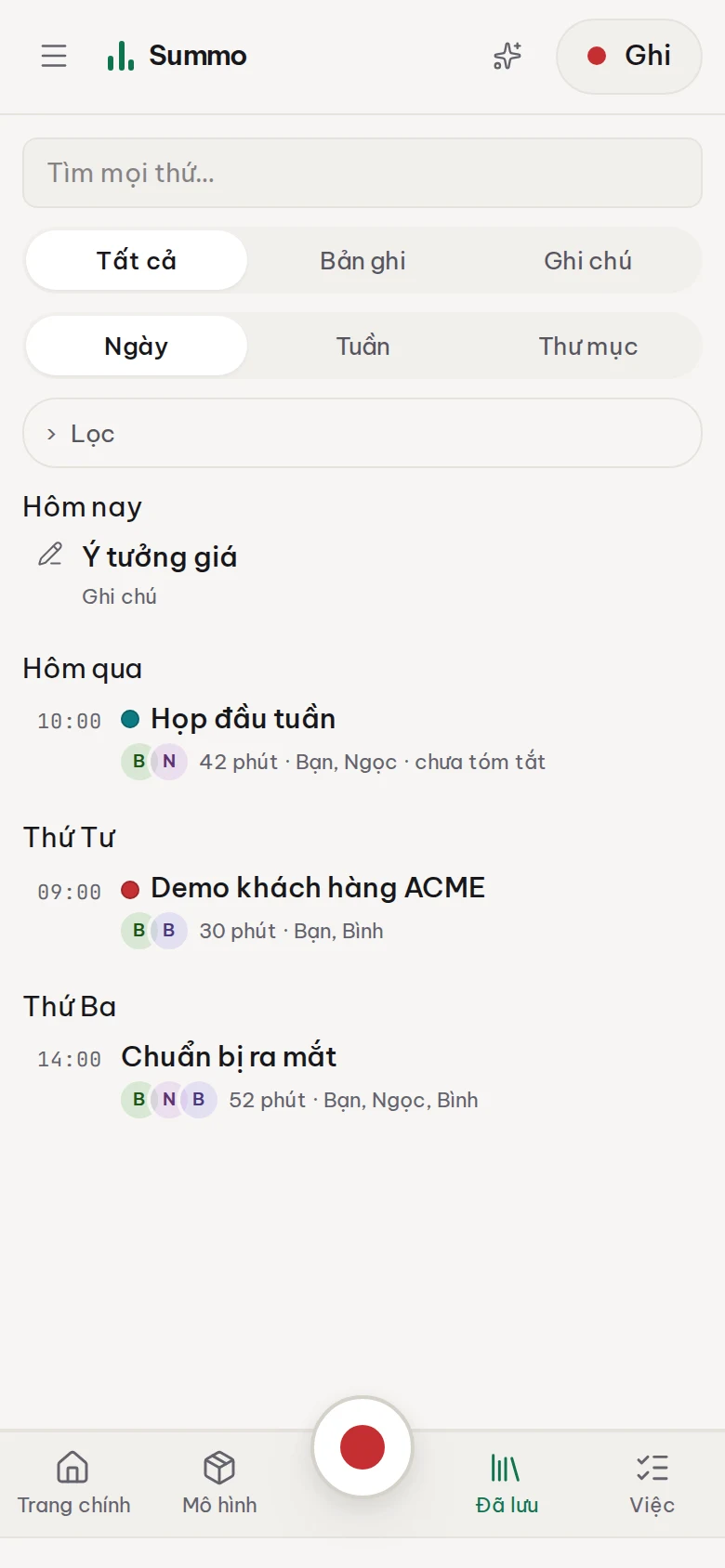
Summo at 390px: the library with its filters folded away.
The library on a phone — the filters fold away so the list comes first.